Categories
Social Media

5 Signs You Need a Social Media Strategy (and what to do about it)

Free Workbook for Small Business Owners

Let me guess – you’re posting on social media because you know you “should.” Everyone says it’s important for your business. But deep down, you’re not entirely sure if it’s really doing anything.

You post when you remember. You share what feels easy. You see what competitors are doing and think “maybe I should try that too.” But at the end of the day, you can’t confidently say whether your social media is helping your business or just eating up your time.

If that sounds familiar, you’re not alone.

Most small business owners are winging it on social media. They’re posting randomly, hoping something sticks and feeling frustrated and drained when the results don’t match the effort.

Here’s the truth: Random posting equals random results.

But there’s good news. The fact that you’re recognising this means you’re already ahead of most businesses. And fixing it doesn’t have to be complicated.

The Problem with “Winging It”

Social media without a strategy is like trying to run your business without a plan. You might stumble onto success occasionally but it’s mostly luck. Without a clear strategy, you’re likely:

  • Posting inconsistently – three times one week then nothing for a month
  • Creating content based on what feels easy and not what serves your goals
  • Copying what your competitors do without understanding why
  • Not tracking what’s working (or even knowing what to track)
  • Spending time on social media but seeing no real business impact

Sound exhausting? That’s because it is.

The problem isn’t that you’re doing social media wrong. The problem is you’re doing social media without intention.

What is a Social Media Strategy?

Before we go any further, let’s clear something up. A social media strategy isn’t a complicated 50-page document full of marketing jargon.

A strategy is simply:

  • Knowing WHO you’re talking to
  • Understanding WHAT they need from you
  • Being clear on WHY you’re on social media (your business goals)
  • Having a plan for WHAT to post and WHEN
  • Tracking WHETHER it’s working

When you have a strategy, you know what you’re doing and why. You can make informed decisions. And most importantly, you can connect your social media efforts to actual business results.

Introducing: The 5 Signs Workbook

I created this free workbook because I kept seeing the same patterns with small business owners.

They’d come to me frustrated, overwhelmed and convinced they were “bad at social media.” But they weren’t bad at it. They just didn’t have a strategy.

The ‘5 Signs You Need a Social Media Strategy’ Workbook helps you:

  • Identify exactly where your social media is falling short
  • Understand why those gaps matter for your business
  • Get practical solutions you can implement yourself
  • Know when it makes sense to get professional help

This isn’t about making you feel bad about what you’re not doing. It’s about giving you clarity on where you are and a practical path forward.

What’s Inside the Workbook

The workbook walks you through 5 telltale signs that your social media needs a proper strategy.

For each sign, you’ll:

  1. Read an honest description to see if it applies to you
  2. Reflect on your current approach with guided questions
  3. Get a Quick Fix you can implement immediately
  4. Learn when professional help makes more sense than DIY

At the end, you’ll score your results and receive personalised next steps based on how many signs you identified with.

What Makes This Workbook Different

  • It’s interactive, not passive
    This isn’t just information you read and forget. You’ll actively work through reflection questions that help you understand your specific situation
  • It’s honest, not sugar-coated
    If your social media needs work, you’ll know. But you’ll also know what to do about it. No vague advice like “just be consistent” or “post more often”.
  • It’s practical, not theoretical
    Every sign includes actionable solutions. Quick Fixes you can implement today, plus guidance on when professional support makes more sense.
  • It’s personalised, not generic
    Based on your results (how many signs you tick), you’ll get specific next steps tailored to where YOU are right now. Not where some expert thinks you should be.
Who Is This Workbook For?

This workbook is perfect if you:

  • Post on social media but aren’t sure if it’s working
  • Feel overwhelmed by all the conflicting advice out there
  • Want to stop wasting time on things that don’t matter
  • Need clarity before investing more time or money in social media
  • Are ready to be honest about what needs to change
  • Run a small business and do your own marketing
  • Feel like social media is just another task on your endless to-do list

This workbook is NOT for you if:

  • You already have a clear strategy and see consistent results
  • You’re not willing to honestly assess your current approach
  • You’re looking for quick hacks or shortcuts (there aren’t any)
  • You expect social media success without any effort or investment
What You’ll Gain From This Workbook

By the time you finish working through this 20-minute exercise, you’ll have:

Clarity on whether your social media is helping your business or just keeping you busy

Understanding of the specific gaps in your current approach (not just vague feelings of “this isn’t working”)

Confidence to make decisions about your social media strategy instead of second-guessing everything

Direction with clear, actionable next steps that are right for YOUR situation (no more guessing or copying)

Time saved in the long run by focusing on what matters for your business goals

Peace of mind knowing you have a plan moving forward instead of just winging it

Permission to either DIY with the Quick Fixes or get professional help (both are valid choices)

Ready to Get Clear on Your Social Media?

Stop guessing. Stop copying. Stop feeling frustrated.

Download the free “5 Signs You Need a Social Media Strategy” workbook and finally get clarity on what’s working, what’s not and what to do about it.

You’re already spending time on social media. This workbook ensures that time is actually moving your business forward.

P.S. If you’re still reading this, you already know your social media needs work. Stop putting it off. Download the workbook, spend 20 minutes getting honest with yourself and finally get clarity on what to do next. Your future self will thank you.
5 Signs You Need a Social Media Strategy Cover Page

Download the 5 Signs You Need a Social Media Strategy

About Synergy Social

I’m Gemma, founder of Synergy Social. I help small businesses in West Sussex simplify their digital marketing, connect with their ideal customers and thrive online.

My approach is straightforward: no jargon, no cookie-cutter solutions, no unrealistic promises. Just clear guidance, practical strategies and genuine support.

Whether you need a comprehensive audit, a complete strategy, ongoing management or just some training to do it yourself, I’m here to help.

But first, download the workbook. Get clarity on where you are. Then we can talk about where you want to go.

Categories
Social Media

Why Understanding Your Social Media Metrics Actually Matters (And How It Helps You Create Better Content)

If you’re a small business owner showing up on social media, you’re already doing the hard part. You’re creating content, engaging with your audience and putting yourself out there consistently.

But here’s the question: do you know if it’s actually working?

For many small business owners, checking social media insights feels like opening a confusing report card. There are numbers everywhere, some go up, some go down and it’s hard to know what any of it really means or what you should do about it. Here’s the thing: understanding social media metrics for small business isn’t about becoming a data expert. It’s about knowing what’s connecting with your audience so you can do more of what works and stop wasting time on what doesn’t.

Social Media Metrics Tell You What Your Audience Actually Wants

You might think a post is brilliant but if your insights show that hardly anyone engaged with it, that’s valuable information. On the flip side, a post you threw together quickly might perform surprisingly well and that’s a clue worth paying attention to.

When you understand which social media metrics matter, you start to see patterns. You notice that your audience saves educational posts, shares relatable stories or engages more with behind-the-scenes content. These patterns become your roadmap for creating content that really connects.

Metrics Help You Stop Guessing and Start Creating With Purpose

Without looking at your metrics, you’re essentially creating content in the dark. You might be posting at the wrong times, using hashtags that don’t reach your audience or focusing on content formats that don’t land. But when you know what reach, engagement, saves and shares are telling you, you can make informed decisions. You can experiment with confidence, track what happens and adjust based on real results rather than gut feelings or what you think you should be doing

You Don’t Need to Track Everything

One of the biggest myths about social media metrics is that you need to monitor every single number. You don’t. In fact, trying to track everything is a fast track to overwhelm.

For small businesses on Instagram and Facebook, there are just a handful of key metrics that give you the insight you need to improve your content and grow your audience. Once you understand what each one means and how to use it, checking your insights becomes less intimidating and truly helpful.

Better Social Media Metrics Understanding = Better Content

Here’s what happens when you start paying attention to the right metrics:

  • You stop creating content that nobody wants and start creating content people engage with
  • You understand which posts are bringing new people to your profile and which ones are strengthening relationships with your existing audience
  • You can confidently say “this type of content works for my business” instead of wondering if you’re doing it right
  • You save time because you’re focused on what matters, not guessing or copying what everyone else is doing
    Review the posts that received less engagement than you hoped. Was there a common theme or format?

Understanding your metrics isn’t about vanity numbers or chasing viral posts. It’s about building a social media presence that supports your business goals in a sustainable, intentional way.

Ready to Make Sense of Your Metrics?

If you’ve been avoiding your Instagram or Facebook insights because they feel overwhelming, I’ve created something to help.

The Small Business Guide to Social Media Metrics That Matter breaks down the key metrics you need to pay attention to (reach, engagement, saves, shares, profile visits and video watch time). For each one, you’ll get a clear explanation of what it means, why it matters and specific content ideas to help you improve it.

No jargon. No complicated formulas. Just practical guidance to help you understand what’s working and what to do next.

Cover page for The Small Business Guide to Social Media Metrics That Matter

Download The Small Business Guide to Social Media Metrics That Matter Now

Don’t forget to download your copy of The Small Business Guide to Social Media Metrics That Matter and start understanding social media metrics today. And if you have any questions or need help with your social media metrics, I’m here to support you every step of the way!

Sign up for The Synergy Scoop – the monthly email newsletter from Synergy Social.

Categories
Social Media

Reflect on Your Social Media Strategy: A Guide for Small Business Owners

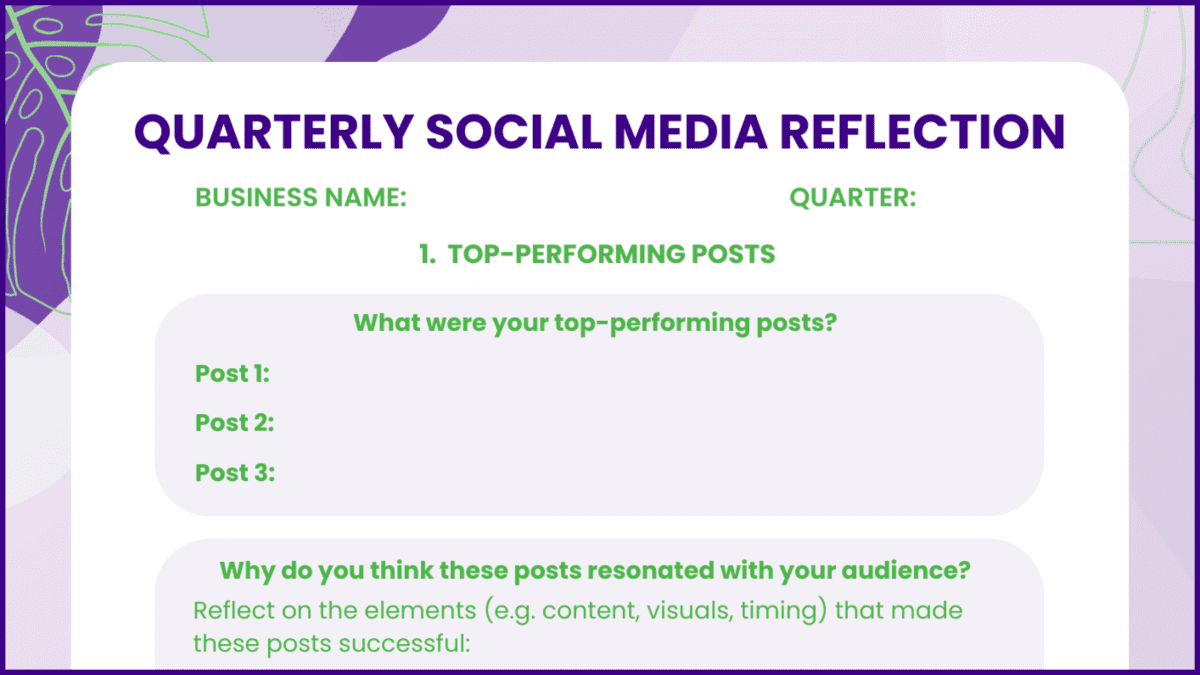
🌟 Reflect on Your Social Media Strategy for the Past Quarter 🌟

As we step into autumn, it’s the perfect time to pause and reflect on your social media strategy over the summer. Taking a moment to evaluate what worked and what didn’t can set you up for even greater success in the months ahead!

In this post, we’ll guide you through a reflection process to assess your social media efforts and set the stage for success in the coming months.

Why Reflection is Crucial for Social Media Success

Social media is a dynamic landscape. Regular reflection is essential to stay ahead of trends, adapt to algorithm changes, and understand evolving audience preferences. Reflecting on the past quarter allows you to:

  • Identify what’s working: Understand which content resonates with your audience so you can create more of it.
  • Spot areas for improvement: Pinpoint underperforming content and strategize on how to improve it.
  • Set informed goals: Use your insights to set realistic, data-driven goals for the next quarter.

By dedicating time to reflect, you’re not just looking back; you’re setting the stage for future growth and success.

Step-by-Step Guide

Step 1: Analyze Your Top-Performing Posts

Start by reviewing your top-performing posts from the last quarter. These are the posts that received the most engagement, whether through likes, shares, comments, or clicks.

Ask yourself:

  • What were your top 3 posts?
    Consider the types of content (e.g., images, videos, infographics) and the topics that resonated with your audience.
  • Why do you think these posts resonated?
    Analyze the common factors among your top posts. Was it the timing, the message, or perhaps the visual appeal?

Understanding why these posts succeeded can help you replicate that success in future content.

Step 2: Evaluate Your Engagement and Growth Goals

Next, compare your actual performance to the goals you set at the beginning of the quarter. Whether your goals were related to engagement, follower growth, or website traffic, it’s important to assess how well you did.

Ask yourself:

  • Did you hit your engagement and growth goals?
    If you met or exceeded your goals, celebrate that success! If not, dig into the data to understand why.
  • What held you back?
    Identify any challenges or external factors that may have impacted your performance. Were there any unexpected events or shifts in your industry?

This analysis will help you set more accurate and attainable goals for the next quarter.

Step 3: Identify Underperforming Content

Not every post will be a hit, and that’s okay. The key is to learn from the content that didn’t perform as expected.

Ask yourself:

  • What content didn’t perform as expected?
    Review the posts that received less engagement than you hoped. Was there a common theme or format?
  • How could it be improved?
    Think about ways to tweak this content in the future. Could you improve the visuals, refine the messaging, or change the posting time?

By refining your approach, you can turn underperforming content into future successes.

Step 4: Reflect on New Strategies and Platforms

If you tried any new strategies or platforms last quarter, now is the time to assess their effectiveness.

Ask yourself:

  • Were there any new strategies or platforms you tried?
    Did you experiment with new types of content, a different posting schedule, or a new social media platform?
  • What were the results?
    Analyze the outcomes. Did these new approaches meet your expectations? Were they worth the time and effort?

This reflection will help you decide whether to continue with these new strategies or pivot to something else.

Get Your Free Reflection Worksheet

To make this process easier, we’ve created a free downloadable worksheet that guides you through each step of this reflection. The worksheet includes all the questions we’ve discussed, with space to jot down your thoughts and observations.

Download the Quarterly Social Media Reflection Worksheet Now

Use this worksheet as a tool to dive deep into your social media performance and set your business up for success in the coming quarter.

Final Thoughts: Setting the Stage for Future Success

Reflecting on your social media strategy is more than just a year-end task—it’s an ongoing process that should happen regularly. By taking the time to analyze your performance, you can make informed decisions that drive growth and engagement for your business. Armed with insights from the past quarter, you can confidently set new goals, refine your content, and continue to grow your presence online.

Don’t forget to download your reflection worksheet and start this process today. And if you have any questions or need help with your social media strategy, I’m here to support you every step of the way!

Categories
Social Media

High Engagement Social Media Posts

The Key Elements of High-Engagement Social Media Posts

In the fast-paced world of social media, capturing and maintaining your audience’s attention on social media is essential for business success. How do you ensure that your posts stand out with countless brands vying for attention? The secret lies in understanding the key elements that drive engagement. In this blog post, we’ll break down the essential components of high-engagement social media posts, helping you craft content that resonates with your audience and delivers results.

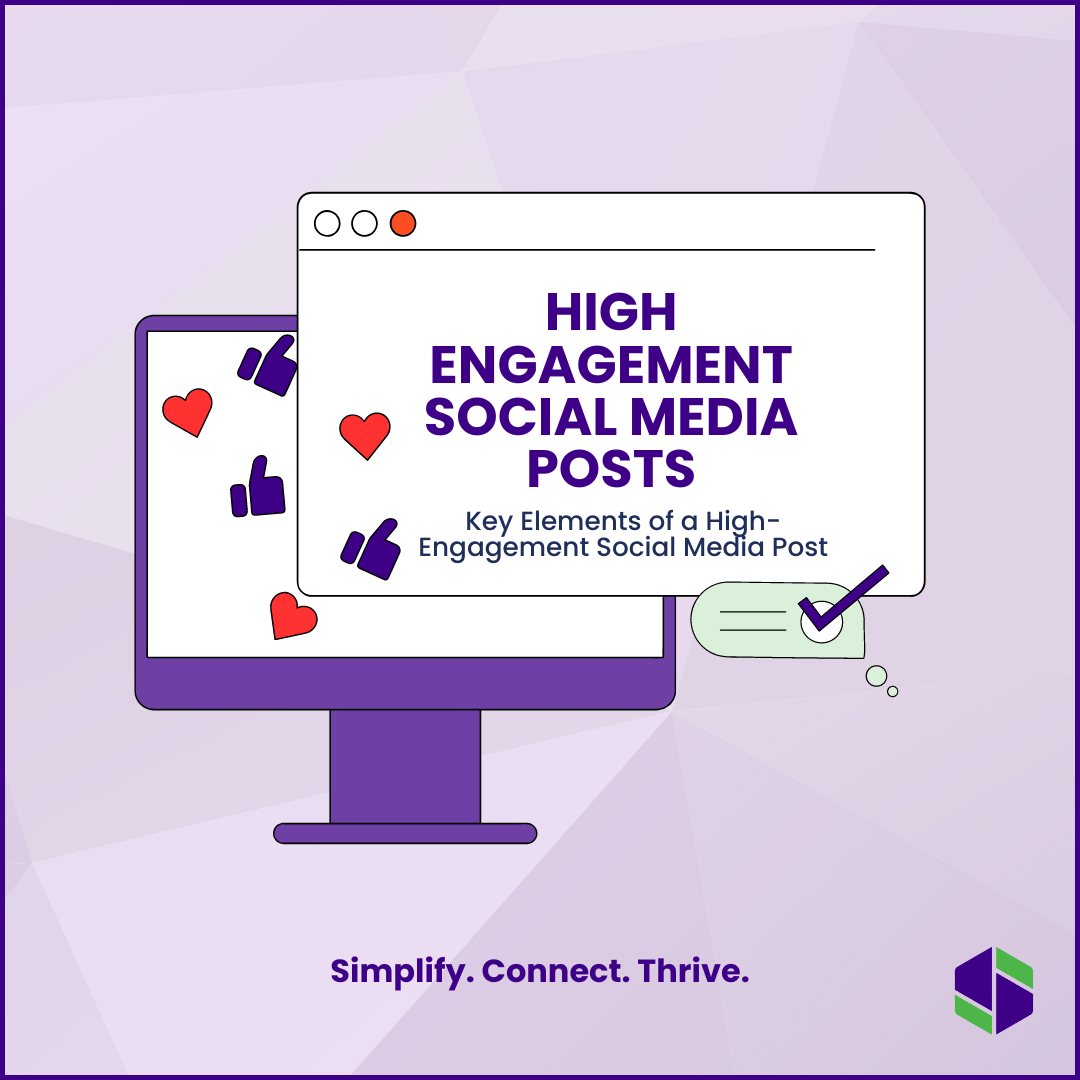
Infographic titled High engagement social media posts

Know Your Audience: The Foundation of Engagement

Before diving into content creation, it’s crucial to have a deep understanding of your target audience.

  • Who are they? Demographics, interests, and online behaviours.
  • What do they want? Identify their needs, desires, and pain points.
  • Where are they? Understand which social platforms they frequent.

By tailoring your content to resonate with your audience, you’ll increase the likelihood of engagement and build a loyal following.

1. Visuals That Wow: The First Impression

Visuals are often the first thing users notice as they scroll through their feeds, so it’s crucial to make a strong impression immediately.

  • Image/Graphic Quality: Always use high-resolution images or graphics. Low-quality visuals can make your brand look unprofessional, which is the last thing you want when trying to engage your audience.
  • Brand Consistency: Ensure that your visuals align with your brand’s colour scheme and overall style. Consistency in visual branding helps build a recognisable and trustworthy presence over time.
  • Eye-Catching Design: Leverage design principles like contrast, whitespace, and balanced composition to make your visuals pop. An effective design grabs attention and encourages viewers to pause and engage with your content.
  • Relevance: Choose visuals that are directly related to the content of your post. Irrelevant or generic images can confuse your audience and weaken your message.

Compelling visuals are your first chance to make an impact, so make them count. Use high-quality, brand-aligned images that are visually appealing and directly relevant to your message.

2. Engaging Copy

Once you’ve captured attention with your visuals, it’s the copy that keeps your audience engaged and compels them to act.

  • Headline: A clear, catchy headline is essential for drawing readers in. Think of it as your hook—it should be intriguing enough to make people want to read more.
  • Tone & Voice: Match your copy’s tone and voice to your brand’s personality. Whether you’re aiming for a casual, conversational style or a more formal, professional tone, consistency is key to building trust with your audience.
  • Brevity: Social media is all about quick consumption. Keep your text concise and to the point, ensuring it can be easily read and understood in just a few seconds.
  • Value Proposition: Communicate what’s in it for your audience. Whether you’re offering a solution to a problem, sharing valuable information, or promoting a product, the benefit to the reader should be front and centre.

Engaging copy is essential for maintaining interest and driving action. Keep it clear, concise, and aligned with your brand’s voice, while always focusing on the value you offer to your audience.

3. A Strong Call to Action: Guiding Your Audience

A strong CTA is the bridge between engagement and conversion, guiding your audience towards taking the desired action.

  • Clear Instructions: Use direct, action-oriented language in your CTA, such as “Sign Up Now,” “Learn More,” or “Shop Today.” Clear instructions leave no room for confusion about what the next step should be.
  • Urgency: Creating a sense of urgency can significantly boost response rates. Phrases like “Limited Time Offer” or “Only a Few Left” encourage your audience to act quickly, rather than putting it off for later.
  • Placement: Make sure your CTA is prominently placed and easy to find. Whether it’s a button or a link, it should stand out from the rest of your content and be positioned where it can’t be missed.

A strong CTA is crucial for converting engagement into tangible results. Make sure it’s clear, urgent, and prominently placed to maximize its effectiveness.

4. Harness the Power of Hashtags

Hashtags are a powerful tool for increasing your post’s visibility and reaching a broader audience.

  • Relevance: Always use hashtags that are relevant to the content of your post and your audience. Irrelevant hashtags can attract the wrong audience and dilute your message.
  • Mix of Popular & Niche: Combine widely used hashtags with more specific, niche ones. This strategy allows you to tap into large, trending conversations while also reaching your target audience in more focused discussions.
  • Hashtag Count: Generally, 3-5 hashtags are optimal for engagement. Using too many can make your post look cluttered and unprofessional.
  • Brand Hashtags: Don’t forget to include your branded hashtag if you have one. This helps build your brand identity and encourages user-generated content.

Hashtags are essential for boosting visibility, but they need to be used strategically. Focus on relevance, and balance popular tags with niche ones to reach both broad and targeted audiences.

Measuring and Optimizing

To truly master social media, you need to track and analyse your performance.

  • Identify key metrics. Determine which metrics are most important to your business goals (e.g., engagement rate, click-through rate, conversions).
  • Utilize analytics tools. Most social platforms offer built-in analytics, or you can use third-party tools for deeper insights.
  • Learn and adapt. Use your data to identify what’s working and what’s not. Experiment with different approaches and refine your strategy over time.

Creating high-engagement social media posts is both an art and a science. By focusing on compelling visuals, engaging copy, strong CTAs, and appropriate hashtags, you can significantly improve your posts’ performance and connect more effectively with your audience. Remember, each of these elements plays a crucial role in the success of your social media content, so be sure to give them the attention they deserve.

Looking to elevate your social media strategy even further? At Synergy Social, I specialise in simplifying digital marketing, helping your business connect and thrive. Reach out today to learn how I can help you create content that not only gets noticed but drives meaningful engagement.

Ready for your small business to thrive online?

Get in touch now to discover how Synergy Social can help your business shine.